Are Paper Bowls Recyclable
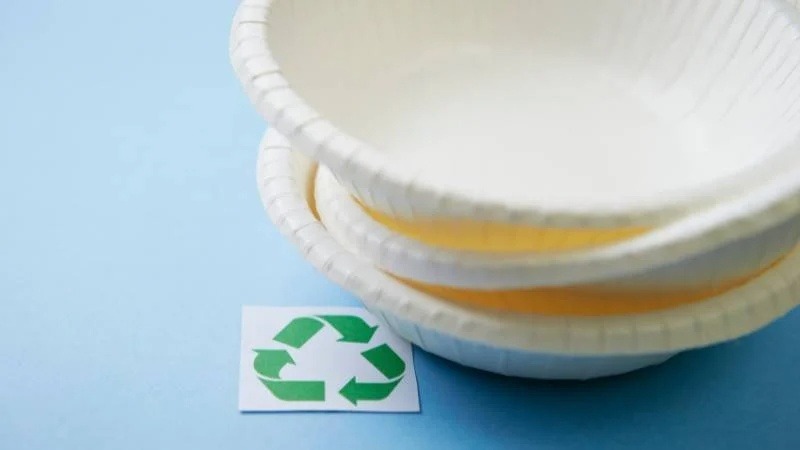
Most paper bowls appear recyclable, but in reality, 70% to 90% still end up in landfills, primarily due to coatings and food contamination on their surfaces. If you’re sourcing paper bowls for cafes, event venues, supermarkets, or restaurant chains, understanding which bowls are recyclable and which are not will help you save on waste and achieve sustainability goals.
This guide explains
- Which paper bowls are recyclable, and which are not
- How PE/PLA/wax coating affects the recycling process
- Why wiped, oily, or soup-stained bowls fail recovery
- Fast 5-second recyclability check for buyers
- Compostable vs recyclable — which is better for brands?
- What to do with non-recyclable bowls
- Best alternatives for eco-friendly packaging procurement
Which paper bowls are recyclable and which are not?
Paper bowls can only be recycled after the paper fibers and coating are separated.
The coating’s primary function is to waterproof and oil-resistant, allowing it to hold water, coffee, or food. Therefore, most paper bowls have a plastic or waxed liner to prevent leaks, and these liners cannot be broken down during fiber recycling.
Single-layer thin polyethylene (PE) paper bowls (10–15 microns), water-coated paper bowls, or completely uncoated paper bowls can be recycled. Polylactic acid (PLA) paper bowls require composting, not recycling. Greasy paper bowls from soup/noodle chains are considered contaminated waste.
Recyclable only under the following conditions:
| Bowl Type | Can it be recycled? | Facility Needed | Real-World Outcome |
| Uncoated paper bowl | Yes | Standard paper mill | Good – but lacks oil barrier |
| Thin-PE bowl (<15μm) | Limited | Advanced pulping | Partial recycling only |
| Double-PE laminated | No | Requires coating separation | Mostly landfilled |
| Wax coated | Very low | Almost no mills accept | Treated as trash |
| PLA coated | Not paper recycling | Industrial compost only | Often mis-disposed |
| Water dispersion coated | Best option today | Regular pulping | Highest fiber recovery |
Why do most paper bowls fail recycling standards?
Most paper mills refuse to accept these bowls because the plastic or wax lining adheres to the pulp. If water cannot penetrate the pulp, recycling is impossible. Furthermore, the cost of separation is higher than purchasing new virgin pulp, so recyclers ultimately choose to landfill them.
Double-layer polyethylene (PE) bowls feel good to the touch but are the most difficult to recycle. Waxed bowls melt into sludge. Polylactic acid (PLA) bowls require composting at specific temperatures, rather than being sent to paper mills.
Even paper bowls labeled “recyclable” will be deemed non-recyclable if they are contaminated with oil, soup, or sauce.
How do PE/PLA/wax coatings affect recyclability?
| Coating Type | Behavior in Pulping | Result |
| PE (polyethylene) | Does not dissolve | Fiber contamination |
| Double-PE | Strong barrier | Completely unrecyclable |
| Wax | Softens → stickiness | Machine blockage |
| PLA | Needs composting, not recycling | Waste if mis-disposed |
| Water-based coating | Disperses in water | Fiber recovered clean |
If you need leak-proof + recyclable, choose water-dispersion coating. Cost is higher (20–30%), but recovery rate increases.
How does food contamination stop recycling?
When broth or grease seeps into the paper fibers, the pulp turns black and sticky, increasing sorting costs and lowering the recycling rate of paper bowls, leading to consumer refusal to recycle.
Even if the paper bowl is labeled as recyclable, bowls covered in grease cannot be recycled.
Advice for buyers:
If the bowl contains noodles, curry, broth, or hot pot, the recycling rate is below 10-20%. You can learn how to estimate calories in the salad bowl you made.
How to identify recyclable bowls in 5 seconds?
- Look inside → smooth plastic shine = PE
- Rub nail lightly → wax leaves mark → not recyclable
- Label says industrial compost only → not for mills
- Soak test 30 sec → if coating floats → PE present
- Ask paper bowl or cups supplier for coating thickness report (below 15μm preferred)
If supplier cannot send report → assume non-recyclable.
Are compostable bowls better than recyclable?
Compostable ≠ Always Better.
PLA bowls require industrial composting in high-temperature, high-humidity environments above 55°C. Few cities possess such facilities, thus PLA bowls often end up in landfills like plastic-lined bowls.
Choose compostable products only if: Your area has a certified composting plant. Retail/restaurant chains collect waste separately. The product is intended for large events for controlled disposal.
Otherwise, recyclable water-based coatings perform better in real-world disposal environments.
What should business buyers check before bulk purchase?
- Coating type and thickness report
- PFAS certification excluded (US/EU 2025 Regulation)
- Does your facility accept coated fibers?
- End-consumer waste sorting capacity
- Minimum order quantity for dispersed coated bowls
- Uses comparison for soup/noodles vs. dry goods
Real Market Insight: recyclability depends not on materials, but on disposal infrastructure.
What to do with non-recyclable bowls?
You can:
- Send to energy-from-waste incineration
- Switch to single-fiber packaging
- Reduce coating weight to enable pulping
- Use PLA only where compost system exists
- Launch return-collection program for bowls
Disposal is part of product design — think from end-of-life backwards.
Best eco-friendly alternatives for brands & food packaging buyers
1. Water-based / dispersion coated bowls
Best balance of strength + recyclability.
2. Bagasse (sugarcane fiber) bowls
Compostable + no plastic lining. Good for dry and semi-wet food.
3. Bamboo & molded fiber bowls
High-fiber recovery rate. Good for eco-food brands.
FAQs
Q1: Is PLA environmentally friendly or a pseudo-environmentally friendly practice?
A1: PLA is plant-based, but it must be composted industrially. Without composting facilities, its effects are not much different from plastics.
Q2: Do paper bowls pollute the environment?
A2: If the material contains oil or a PE coating, it is difficult to recycle and will end up in landfills or incinerators. Choosing the right material can reduce pollution.
Q3: What are some alternatives to paper bowls?
A3: Bagasse, bamboo pulp molding, and water-based coated paper bowls are currently the best choices, depending on the application scenario.
Conclusion
Most people believe paper bowls are recyclable, but only a small percentage truly get recycled. PE, wax, and food stains block pulping. If you want better sustainability, choose water-dispersion coating bowls or molded fiber solutions, and confirm your region’s waste treatment ability before mass purchase. You can custom paper bowl here.