Food Warmer Best Guide 2026: Proven Models to Buy Now
Keeping prepared meals at the proper serving temperature is one of the most important parts of restaurant and food service operations. Whether you run a buffet, catering business, hotel breakfast station, cafeteria, or banquet line, the right hot-holding setup helps protect food quality, support safety standards, and improve the guest experience. A well-chosen food warmer can reduce waste, speed up service, and keep dishes looking fresh during busy periods.
This guide explains what to look for before buying, including capacity, heat source, menu type, cleaning requirements, and placement. It also covers when different warming solutions work best, how to compare practical features, and which mistakes to avoid before investing. If you want equipment that performs well in real service conditions, this article will help you make a smarter purchase.
Why Hot-Holding Equipment Matters in Commercial Service
In a professional kitchen, cooking is only part of the job. Once food is ready, it must stay appetizing until it reaches the customer. That means maintaining the right temperature without drying out proteins, making sauces separate, or causing fried items to lose texture too quickly.
Good warming equipment helps you:
- Maintain safe serving temperatures
- Hold food for longer periods during peak hours
- Improve consistency across multiple service points
- Reduce the need for constant reheating
- Present dishes more attractively in self-serve areas
- Support smoother catering and banquet execution
For restaurants, the value goes beyond convenience. Better holding performance can directly affect guest satisfaction, labor efficiency, and food cost control.
How to Choose the Right Food Warmer for Your Menu
Not every kitchen needs the same type of unit. The best choice depends on what you serve, how long you need to hold it, and where service takes place.
1. Match the unit to the food type
Different foods react differently to heat. Soups, gravies, mashed potatoes, and stews usually need moist, steady heat. Fried items, breaded appetizers, and pastries often benefit from gentler holding to avoid sogginess. Carved meats and full pans of entrees need a setup that keeps temperature even across the container.
Before buying, ask:
- Will you hold wet or dry foods?
- Is the menu buffet-style, plated, or grab-and-go?
- Do you need one item held all day or several menu items at once?
- Will food be replenished in small batches or large hotel pans?
A reliable food warmer should support the actual service pattern of your business, not just look good in a catalog.
2. Consider capacity and pan configuration
Think in terms of volume, not just physical size. A compact countertop model may work perfectly for a coffee shop or snack bar, while a banquet operation may need multiple full-size pans during a single event.
Look at:
- Number of pans supported
- Full-size versus fractional pan compatibility
- Depth of pans
- Total serving volume
- Space available on counters or buffet lines
If your menu changes often, flexible pan layouts can be more useful than a fixed format.
3. Choose the right heat source
Some operators prefer electric models for convenience and consistent control. Others choose fuel-based buffet setups for mobility and events without direct power access. Your decision should reflect where and how the equipment will be used.
Electric options often offer:
- Stable heat control
- Easier long holding periods
- Better fit for indoor fixed stations
- Simpler temperature adjustment
Fuel-based options often offer:
- Portability
- Cleaner buffet presentation
- Use in off-site catering
- Less dependence on outlet placement
4. Pay attention to temperature control
Basic equipment may only provide general warming. More advanced units offer adjustable thermostats, better heat distribution, and easier monitoring. Precision matters because overheating can ruin texture just as quickly as insufficient heat can create safety concerns.
Choose controls that are easy for staff to understand during fast service.
Key Features Buyers Should Compare
A smart purchase decision usually comes down to details. Two similar-looking units can perform very differently in daily use.
Build quality
Stainless steel remains a strong choice for commercial environments because it is durable, clean-looking, and easier to sanitize. Check the gauge, lid construction, handle strength, hinges, and the overall stability of the frame.
Ease of cleaning
Busy teams need equipment that can be cleaned quickly between shifts. Removable pans, smooth surfaces, accessible corners, and simple drainage or wipe-down routines can save a surprising amount of labor.
Lid design
Lids affect both usability and presentation. Roll-top and hinged lids are convenient for self-serve lines because guests can access food without creating clutter. Lift-off lids may work well in lower-volume settings where staff control service.
Footprint
Always measure the real service area. Equipment that is too large can disrupt workflow, while undersized units can slow down replenishment and create lines.
Safety and handling
Check for cool-touch handles, stable legs, secure covers, and non-slip support points. In catering, transport stability matters almost as much as holding performance.
Best Use Cases by Food Service Setting
Buying becomes easier when you think in terms of operation type.
Restaurants
For restaurants with lunch rushes, carving stations, or weekend buffets, fixed electric units often make the most sense. They offer predictable performance and fit well in back-of-house pass areas or front-of-house service lines.
Catering businesses
Caterers need mobility, attractive presentation, and simple setup. Lightweight but sturdy equipment with dependable holding capability is usually the best fit. Since events vary, flexibility matters more than a single specialized format.
Hotels and banquet service
Hotels often need equipment that can handle large volumes while still looking polished. Breakfast buffets, conference lunches, and banquet service all benefit from solutions that support batch holding and easy guest access.
Cafeterias and institutional service
Schools, hospitals, and corporate dining spaces often prioritize durability, capacity, and easy cleaning. In these settings, practical operation tends to matter more than decorative appearance.
When a Chafing Dish Is the Better Choice
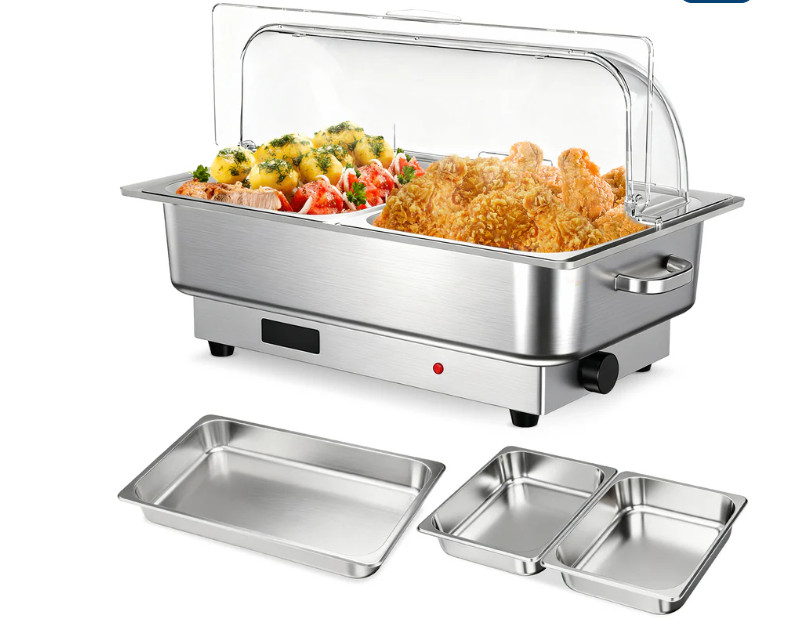
Some buyers automatically compare heavy-duty electric units, but that is not always necessary. In many buffet and event settings, a chafing dish remains one of the most practical and visually appealing solutions.
A traditional chafing dish is ideal when presentation matters, when service is temporary, or when you need equipment that can be transported and set up quickly. It works especially well for catered receptions, weddings, banquet lines, church functions, and self-serve stations where guests expect a polished buffet display.
This option is often a strong fit when you need:
- Elegant buffet presentation
- Simple off-site setup
- Flexible placement without a permanent station
- Easy access for guests
- Short- to medium-duration holding
That said, it may not be the best answer for every operation. If your service runs continuously for long hours, or if you need exact temperature control for delicate items, an electric alternative may be the more dependable choice.
Common Buying Mistakes to Avoid
Many operators focus too much on price and not enough on usability. That can lead to equipment that looks acceptable at first but underperforms during real service.
Here are some common mistakes:
Buying for maximum capacity instead of real demand
Oversized equipment can waste space, consume more energy, and encourage overproduction. Buy for your actual service pattern, with a reasonable growth margin.
Ignoring menu changes
If your offerings rotate often, a rigid setup may become limiting. Flexible pan sizes and adaptable layouts are usually a better long-term investment.
Overlooking staff workflow
Even a good unit can be frustrating if it slows refills, creates crowding, or makes cleaning difficult. Think about who will use it and how often.
Choosing presentation over function
Stylish equipment matters in guest-facing areas, but it should not come at the cost of stability, heat performance, or easy maintenance.
Forgetting storage and transport
For event-based service, consider where the equipment will be stored and how it will be moved. Weight, stacking, and packing convenience all matter.
Practical Tips for Getting Better Performance
Buying the right equipment is only half the job. Daily use also affects results.
Preheat properly
Starting with a cold unit can reduce holding effectiveness early in service. Give the system time to reach working temperature before loading pans.
Avoid overfilling
Too much product in a pan can affect heat distribution and make serving messy. Keep portions manageable and replenish as needed.
Use lids strategically
Keeping lids closed helps maintain temperature and moisture. Open only when necessary, especially during lower traffic periods.
Hold in batches
Smaller, more frequent refills often preserve quality better than one large pan sitting for too long.
Train staff on temperature awareness
Staff should understand the difference between warm-looking food and safely held food. Clear procedures reduce mistakes during busy shifts.
How to Decide Before You Buy
If you are narrowing down options, use a simple decision checklist:
- What foods will be held most often?
- How many guests do you serve at peak volume?
- Is service fixed, mobile, or both?
- Do you need exact temperature control?
- Is appearance important for front-of-house display?
- How much space do you actually have?
- How quickly must the unit be cleaned and reset?
A thoughtful purchase should support both quality and workflow. The most expensive option is not always the best, and the cheapest one often costs more over time through poor performance, shorter lifespan, or labor inefficiency.
FAQ
What is the best food warmer for a buffet line?
The best choice depends on menu variety, service length, and available space. Buffet lines usually benefit from units that provide even heat, simple refilling, and easy guest access. If presentation is a top priority, buffet-style service equipment may also be worth considering.
Is a chafing dish better than an electric unit?
It depends on where and how you serve. For catered events, temporary buffet setups, and elegant front-of-house presentation, it can be an excellent option. For long service hours and more precise control, electric equipment is often the stronger choice.
What size should I buy for a small restaurant?
Start by reviewing your busiest service window and how many portions you hold at once. A compact countertop model may be enough for limited menus, while broader service programs usually need multiple pan positions.
How do I keep held food from drying out?
Use the right heat level, keep lids closed whenever possible, and avoid holding large batches for too long. Foods with sauces or moisture-rich components typically hold better than delicate fried items.
Is stainless steel a good material for commercial use?
Yes. It is durable, easy to clean, and well suited for frequent daily use in demanding environments.
Conclusion
Choosing the right food warmer is not just about keeping meals hot. It is about protecting texture, improving service speed, supporting food safety, and making daily operations easier for your team. The best model for your business will depend on menu style, service volume, mobility needs, and the level of control you require.
Before buying, focus on real-world performance: capacity, cleaning, heat consistency, durability, and workflow fit. A thoughtful investment can reduce waste, improve presentation, and help staff serve with more confidence during busy periods. When you match the equipment to your operation instead of chasing the lowest price, you are far more likely to get dependable results that benefit both your team and your guests.